-
 play_arrow
Channel X94 12.6k Listeners last 30 days

music_note



Hackney Council receives over 27,000 emails to save Moth Club as the battle continues
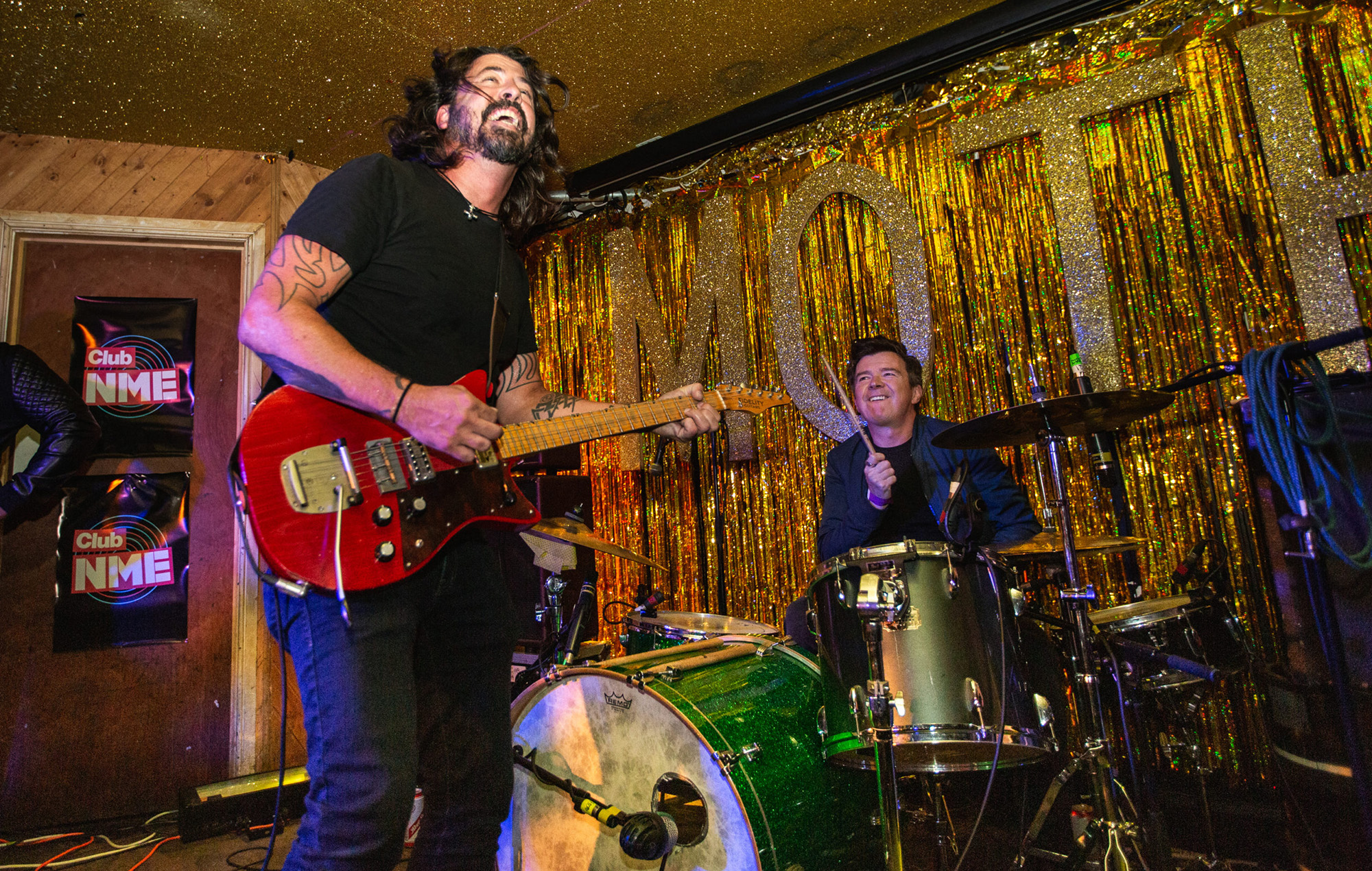

Hackney Council has received more than 27,000 emails to save London music venue Moth Club from potential closure in response to plans to build a block of flats in its vicinity.
- READ MORE: UK grassroots venues suffering from “the complete collapse of touring” – here’s how you can help
The venue came under threat last September, when owners took to social media and called on local residents and fans to reach out to the borough’s planning department to contest a proposal for a new block of flats.
They were later hit with two separate planning applications for flats on Morning Road, next to MOTH Club, which were submitted to Hackney Council.
A petition to oppose the planning applications went on to receive more than 25,000 signatures, with owners urging people in posts shared earlier this month to “keep the pressure on, sign and share the petition and write to the council”. Visit here to find out more and to sign the petition.
Now, a new push to stop planned developments has emerged in the form of a series of events coined ‘Stomping Grounds’. The parties aim to protect grassroots venues in the UK.
“All we’re asking from Hackney Council is a fair and transparent process for MOTH Club, one of London’s most legendary grassroots venues,” says Kieth Miller, Programmer and Founder of MOTH, per MixMag.
“Throughout this planning process, we’ve been met with zero clarity, zero communication, and zero fairness. We deserve better, and so does every venue fighting to keep culture alive in this city.”
The next ‘Stomping Grounds’ event is set to take place on Thursday (December 18), at the venue. It’s a free event, but attendees must email action to Hackney Council to get tickets. You can get your tickets here.
The party, which is organised by campaign group Save Our Scene and Kickers, will be headlined by Kojey Radical, with support from The Silhouettes Project and several other emerging artists.
“This isn’t just about MOTH Club; it’s about protecting the future of live music in London and beyond,” Miller says. “Huge names have already signed up to support us; from Green Day, Lewis Capaldi and Tame Impala to just about every venue, label and promoter in London.”
Last month, Music Venue Trust issued a statement on the future of Moth Club, saying its potential closure poses an “existential threat” to all grassroots venues..
“The Council has sidelined the Agent of Change principle, ignored expert evidence, and withheld a key acoustic report from an FOI request while relying on assessments that independent specialists describe as “useless”,” they continue.
“For almost a year, MOTH Club and MVT have struggled to achieve meaningful engagement from planning officers, even after raising serious concerns about flawed reports, contradictory information, and failures in the consultation process.
“If Hackney side-steps national policy here, it sets a catastrophic precedent: any grassroots venue in the UK could be placed in the same position by developers who choose not to mitigate noise. This isn’t just a MOTH Club issue. It’s a test of whether planning protections for cultural spaces have any real weight.”
It comes after an announcement of new government plans back in July, which are supposed to give venues that are subject to noise complaints by nearby residential developments “greater protection”.
The new measures, which were published back in November under the national licensing policy framework, mean that developers would have to take responsibility for soundproofing flats and apartments near existing pubs or music venues.
The new protection will be ushered in under the “agent of change principle”, as mentioned by MVT, with the Department for Business and Trade saying it will consider further options to support established venues under the new framework.
The need for new regulations follows a series of high-profile cases in recent years, including Night & Day Cafe in Manchester, which was issued a noise abatement notice by Manchester City Council in November 2021 due to a noise complaint from a resident who had moved to Manchester during lockdown.
The nearly three-year-long row ended with the venue being told to impose restrictions that limited noise late at night to a reasonable level.
New developments being opened near venues have been a cause for concern for owners faced with the risk of noise complaints from tenants.
It comes during a period where the UK music scene continues to face the “complete collapse” of touring, with huge areas going without live music, one venue closing every two weeks, and the uphill struggle for artists to afford to exist, let alone play live.
Plans for a new office block next to the Prince Albert pub in Brighton were approved on appeal in January, after being refused in November 2023. More than 1200 people objected to the planning application, and more than 22,000 have since signed a petition objecting to the plans.
Norman Cook, aka Fatboy Slim, said that the venue faced a “slow death” if planning permission for a new development is allowed to go ahead.
The new framework is especially crucial for venues at this time, after 2023 proved to be “disastrous” and the worst year on record, with 125 grassroots music venues shutting their doors. At the beginning of the year, it was also reported that 70.6 per cent of independent UK acts have never toured, while 84 per cent of unsigned artists simply can’t afford to.
The post Hackney Council receives over 27,000 emails to save Moth Club as the battle continues appeared first on NME.

Featured post
Latest posts
Olivia Rodrigo has recently been inspired by The Cure, New Order and Joy Division
Stone Roses and Primal Scream legend Mani’s cause of death revealed
Yungblud on why rock isn’t dead – thanks to Fontaines D.C., Turnstile and Geese
Stone Roses and Primal Scream legend Mani’s cause of death revealed
Stranger Things’ Finn Wolfhard directs first-ever music video for George Harrison’s ‘Give Me Love (Give Me Peace On Earth)’
Current show
The Morning Show
With Charlie and Annalee
Your good morning wake up crew, with Charlie and Annalee. Morning fun music chat with guests. Listen, participate, laug,h and get through your mornings with us
closeUpcoming shows
Chart